
By Pam Caldwell, Certified Herbalist & Founder of Herb Lore
The first thing you need to know is that your body knows exactly what it needs to do. It is perfectly capable of growing a baby, carrying the baby to term, and giving birth to him or her. If you’re trying to conceive, you’ve probably discovered how quickly the world of fertility advice becomes overwhelming. Tracking apps, supplement lists, and forums full of conflicting opinions are a lot to sort through when all you want is a clear place to start. Herbalists have been helping women prepare their bodies for pregnancy for centuries, and a handful of time-tested plants keep earning their place in that tradition.
This guide walks through the best herbs for fertility, what each one does, how to take them, and how long to give them before you expect results. Everything here reflects the approach Pam Caldwell, Herb Lore’s founder and certified herbalist, has refined over nearly thirty years of working with mothers trying to conceive.
Key Takeaways
The best herbs for fertility fall into two groups that work together. Vitex (chaste tree berry) supports hormone balance and a regular cycle, while red raspberry leaf, red clover, nettle, oatstraw, and alfalfa tone the uterus and supply the deep mineral nourishment conception draws on. Dandelion rounds out the picture by supporting the liver, which processes and clears hormones. Take them daily for three to six months before trying to judge results, and loop in your healthcare provider if you take any medications.
A few notes before we begin:
If it ain’t broke, don’t fix it. The body knows how to breathe, beat the heart, and make many functions in the body work, without our conscious effort or without us having to do or take anything. In this very same way, the body also knows how to conceive, grow, birth and nourish a baby. We don’t take anything or do anything special to help us beat our heart, or to help the breathing process if things are going along well. If a problem comes up, then this is when we can take something or do something to help bring this process back into balance and alignment. If it’s working well, then leave it alone to do what it knows best to do, and don’t interfere with the process and complicate the situation by taking something you don’t need and that isn’t necessary. Trust your body – and trust the process.
Prenatal vitamins – I DO recommend that every woman trying to conceive be taking a prenatal vitamin. The Folic Acid or Folate in a prenatal is the most important vitamin (Folate is preferred) – it’s the one that helps prevent neural tube defects in the growing embryo. This system is usually developed in the baby by the time a woman discovers that she’s pregnant, so taking the prenatal vitamin prior to conception is best, but even so, taking it once you find out that you’re pregnant is still beneficial. The amount of Folic Acid or Folate needed is 400 mcg daily.
Be patient! Herbs work gradually, and they work best as part of a bigger picture that includes good nutrition, stress management, and guidance from your healthcare provider. If you’re taking medications, particularly hormonal birth control, fertility drugs, or blood thinners, talk with your provider before adding herbs to the mix.
Five Herbs for Fertility That Herbalists Reach for First
Before we look at each herb in depth, here’s the short version of what belongs in a well-built pre-conception routine and why.
|
Herb |
Traditional role in fertility |
How it’s usually taken |
Where to find it |
|---|---|---|---|
| Vitex (Chaste Tree Berry) | Hormone balance, cycle regularity, healthy progesterone levels | Tincture, daily, for 3+ months | Vitex Tincture |
| Red Raspberry Leaf | Tones and strengthens the uterus, supports a healthy uterine lining | Tea or tincture, daily | Red Raspberry Leaf Tea · Tincture |
| Red Clover | Hormone balance and a healthy uterine environment | In a pre-conception blend | Pre-Conception Tea |
| Nettle Leaf | Iron, calcium, and trace minerals that build blood and nourish the lining | In a pre-conception blend | Pre-Conception Tincture |
| Dandelion | Gentle liver support for healthy hormone clearance | Tincture, before and during pregnancy | Dandelion & Nettle Tincture |
Vitex: The Quiet Workhorse of Hormone Balance
Ask nearly any herbalist to name one herb for fertility, and you’ll hear the same answer: Vitex. Also called chaste tree berry, Vitex has a long history of use for supporting the female hormone system. If a woman feels her hormones are out of balance (a common factor in women trying to conceive), we commonly recommend it, as it’s believed to work on the pituitary gland, the small gland in the brain that conducts the hormonal orchestra, encouraging healthy progesterone levels and a more regular cycle. That makes it especially interesting for women whose periods arrive on their own mysterious schedule, or who suspect a short luteal phase is working against them. Having the hormones balanced further increases the chances of successful conception.
Because vitex supports the body’s own signaling rather than supplying hormones directly, it asks for patience. Most women use it daily for at least three months before expecting to see changes in their cycle, and many herbalists consider three full cycles the minimum fair trial. Our certified Organic Vitex Tincture comes in both alcohol and alcohol-free versions, making it easy to take a dropperful with your morning water.
A Note on Timing: Vitex is generally discontinued once pregnancy is confirmed, and it shouldn’t be combined with hormonal birth control or IVF medications, which work on the same system it’s trying to influence. If you’re between those situations, your provider or a qualified herbalist can help you time it well.
Red Raspberry Leaf: A Tonic for the Uterus
Red raspberry leaf may be the most beloved herb in the entire childbearing year, and its reputation begins well before pregnancy. The leaf contains fragrine, an alkaloid that helps tone the muscles of the pelvic region, including the uterus itself. Despite a persistent rumor, it does not stimulate the uterus or start contractions; instead, it simply helps to feed and nourish the uterus, bringing tone and health to the muscle.
It’s also highly nutritive, delivering vitamins and minerals that support a healthy uterine lining. A strong cup of Red Raspberry Leaf Tea each day is one of the simplest, most pleasant fertility habits you can build, and the tincture form covers the days when brewing feels like one task too many. Once you conceive, the same herb carries you straight into pregnancy support as a core ingredient in pregnancy tea blends.
Red Clover and Nettle: Deep Nourishment from the Ground Up
Fertility asks a great deal of the body, and these two herbs answer with minerals. Red clover blossom has traditionally been used to support hormone balance and a healthy uterine environment. Nettle leaf delivers iron, calcium, and a long list of trace nutrients that build strong blood and a well-prepared uterine lining. Herbalists often describe the pair as food in plant form, a slow, foundational nourishment that no isolated supplement quite replicates.
Both herbs appear alongside red raspberry leaf, alfalfa, oatstraw, dandelion, chamomile, and peppermint in our Pre-Conception Tea and Pre-Conception Tincture, blended in the proportions that let the herbs reinforce one another. The oatstraw and alfalfa deepen the mineral content, and the chamomile lends a calming note, because trying to conceive can be an emotional ride all on its own.
A Note On Caution: Because of the red clover and alfalfa, the pre-conception blend is unsuitable for anyone taking blood-thinning medications. If that’s you, single herbs like red raspberry leaf are still on the table, but always check with your provider beforehand.
Dandelion: Why Your Liver Belongs in the Conversation
It surprises many women to learn that fertility support often starts with the liver. This hardworking organ processes and clears hormones once they’ve done their job, so when it’s sluggish, hormonal balance suffers downstream. Dandelion leaf and root have been used for generations as gentle liver tonics, helping the body clear what it no longer needs and keeping the hormonal picture clean.
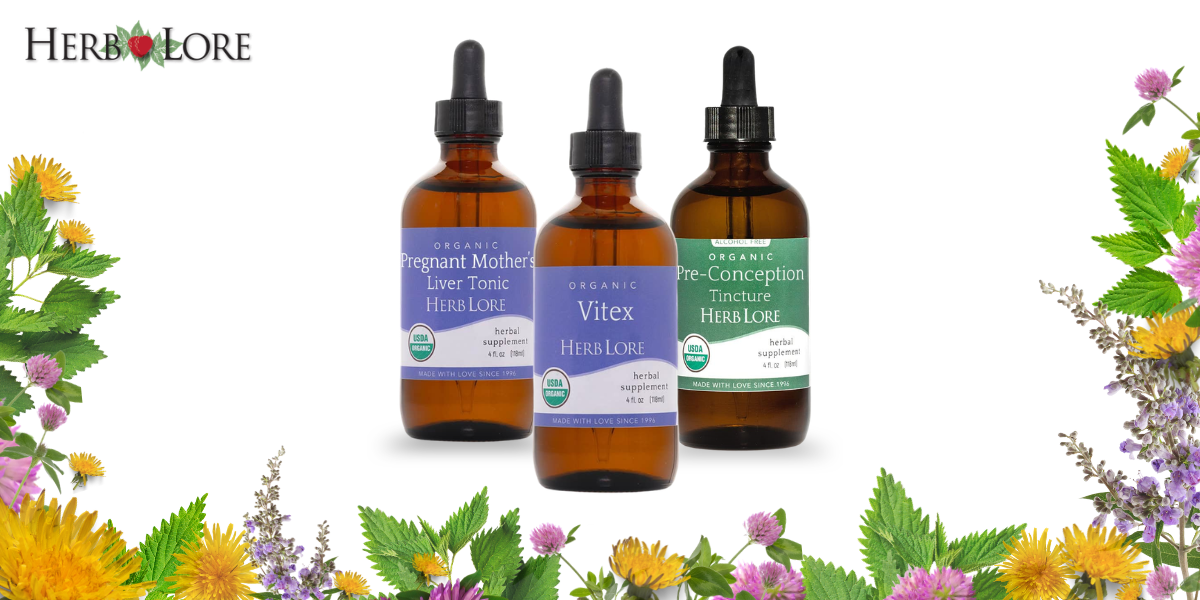
Our Pregnant Mother’s Liver Tonic was formulated specifically for women who are pregnant or trying to become pregnant, and using it before conception may even help prevent morning sickness later on, a welcome bit of foresight from your pre-conception months. For everyday water retention and allergy season, dandelion also pairs with nettle in our Dandelion & Nettle Tincture.
Tea or Tincture? Choosing the Form You’ll Stick With
The herbs above come as a loose leaf tea, a liquid tincture, or both, and the honest answer about which is better is whichever one you’ll take every day. Teas ask you to slow down for a few minutes, which is its own kind of fertility medicine, and they deliver the herbs along with warmth and hydration. Two to three cups a day is the usual rhythm. Tinctures pack the same herbal combination into a few dropperfuls, suit busy schedules and travel, and come in alcohol-free glycerine versions for anyone avoiding alcohol entirely.
Many women land on a hybrid, with vitex tincture in the morning, pre-conception tea through the day. The same trio of core products comes bundled in our Fertility Prep Herbal Bundle, which pairs Vitex, the Pre-Conception Tincture, and the Pregnant Mother’s Liver Tonic in one place.
How Long Does It Take for Fertility Herbs to Work?
This is the question behind most abandoned herbal routines, so it deserves a straight answer. Herbs are cumulative. Practitioners who work with fertility herbs generally look for effects over 60 to 120 days of consistent use, and three to six months is a realistic window before judging whether a routine is helping. That timeline lines up neatly with biology — the egg you ovulate this month began maturing roughly three months ago, so the nourishment you take in now is an investment in cycles still to come.
Consistency counts for more than intensity. A modest daily habit held for four months will do more than an ambitious one abandoned in three weeks. Put the tea where you’ll see it, keep the tincture next to your toothbrush, and let repetition do the quiet work.
Who Should Check with a Provider First
The classic pre-conception herbs are gentle, food-like plants with long traditions of safe use, and that’s precisely why they’ve endured. Even so, a few situations call for a conversation before you begin. Anyone on blood thinners should avoid blends containing red clover and alfalfa. Anyone using hormonal birth control, or preparing for IUI or IVF, should hold off on hormone-active herbs like vitex, since fertility medications and fertility herbs pull on the same levers and can interfere with each other. Hormone-sensitive conditions, thyroid medication, and any prescription regimen are all worth reviewing with a provider who knows herbs.
Once pregnancy is confirmed, switch from the pre-conception products to the Pregnancy Tea or Pregnancy Tea Tincture, which are formulated for the next stage. Our guide to safe and unsafe herbs for pregnancy and breastfeeding is a good bookmark for the whole journey. Pregnancy Tea and Pregnancy Tea Tincture are loaded with readily available vitamins and minerals that help support and promote the health of the growing baby and the pregnant mom. The Pregnancy Tea Tincture is simply the liquid extract of the Pregnancy Tea.
Frequently Asked Questions
What is the best herb for fertility?
Vitex, also known as chaste tree berry, is the herb most herbalists reach for first. It has a long tradition of use for supporting the female hormone system, encouraging healthy progesterone levels and a more regular cycle. That said, the best results usually come from a combination of vitex for hormone balance alongside nourishing herbs like red raspberry leaf, red clover, and nettle, which is why pre-conception blends pair them together.
How long do fertility herbs take to work?
Herbs work gradually and cumulatively. Most herbalists recommend taking fertility herbs consistently for at least three months, and three to six months is a realistic window before judging results. Vitex in particular acts slowly on the body’s hormone signaling, so daily use over several cycles gives it the time it needs.
Can I drink red raspberry leaf tea while trying to conceive?
Yes. Red raspberry leaf is one of the most widely used and safest uterine tonic herbs. It contains fragrine, an alkaloid that helps tone the muscles of the pelvic region, and it is rich in vitamins and minerals. It does not stimulate the uterus or cause contractions, and many women continue it into pregnancy as part of a pregnancy tea blend.
Should I stop taking fertility herbs once I’m pregnant?
Some pre-conception herbs are meant for the trying-to-conceive window rather than pregnancy itself, so the standard advice is to switch once pregnancy is confirmed. Herb Lore recommends moving from the Pre-Conception Tea or Tincture to the Pregnancy Tea or Pregnancy Tea Tincture, which is formulated for pregnancy. Vitex is typically discontinued once pregnancy is confirmed unless a knowledgeable practitioner advises otherwise.
Can I take fertility herbs with birth control or fertility medications?
No, this combination should be avoided. Fertility herbs are used to support ovarian function and hormone balance, while medications like birth control pills or drugs used in IVF protocols work by controlling or suppressing that same system, so the two can work against each other. If you are on any hormonal medication or preparing for fertility treatment, talk with your provider before adding herbs.
Are fertility herbs safe?
The classic pre-conception herbs, such as red raspberry leaf, red clover, nettle, oatstraw, alfalfa, and dandelion, are gentle, food-like herbs with long traditions of safe use. Still, herbs are not right for every situation. Blends containing red clover and alfalfa are unsuitable for anyone on blood-thinning medication, and anyone with a hormone-sensitive condition or on prescription medication should review herbs with their healthcare provider first.
Planting Before the Harvest
Every gardener knows that a good harvest starts months earlier, in soil that’s been fed and tended. Preparing your body for pregnancy works the same way. The best herbs for fertility won’t rush the process, but they will help you build the kind of nourished, balanced foundation that conception favors.
Start early, stay consistent, and keep your provider in the loop. If you want the routine handed to you in one box, the Fertility Prep Herbal Bundle gathers the three core tinctures Pam recommends most, and if you have questions about your particular situation, Herb Lore has been answering them for trying-to-conceive mothers since 1996.
Statements regarding herbal products have not been evaluated by the FDA and are not intended to diagnose, treat, cure, or prevent any disease. Always consult your healthcare provider, especially when trying to conceive, pregnant, or breastfeeding.
Sources:
- Nettle Leaf: Health Benefits, Nutrition Facts, and How to Prepare It | WebMD
- Ovulation: Calculating, Process, Pain & Other Symptoms | Cleveland Clinic
- Physiology, Pituitary Hormones – StatPearls | NCBI Bookshelf
- How Many Eggs Are Women Born With – and How Do They Mature in the Ovaries? | Ovaterra
- Vitex Agnus-Castus: Which Benefits of Chasteberry Are Backed by Science? | Healthline
- Traditional Medicinal Uses, Phytochemistry, Biological Properties, and Health Applications of Vitex | PMC