
Authored by Pam Caldwell Certified Herbalist specializing in Fertility, Pregnancy, Birth, Postpartum, and Lactation.
This is a complete dosing guide for giving herbal tinctures and herbal teas to babies and children. The charts and guidelines below cover infants through age 12 and apply to most single-herb tinctures and teas. They’re drawn from traditional herbalism (referenced from Rosemary Gladstar’s Herbal Remedies for Children’s Health) and are intended for educational use.
These are starting-point guidelines. The right amount for any individual child also depends on weight, overall health, the strength and quality of the specific herb, and the reason you’re using it. When in doubt, start at the low end of the suggested range and consult your child’s pediatrician or a qualified clinical herbalist.
Quick Reference: Children’s Herbal Dosing at a Glance
Standard adult dose (for these charts):
- Tea: 1 cup (8 oz)
- Tincture: 2 droppersful, or about 60 drops
Children’s dose is a fraction of the adult dose, scaled by age. Use the charts below for the per-dose amount, and follow the product label for how many doses per day.
Are Herbs Safe for Babies and Children?
Most gentle, well-known herbs have a long history of use in children’s herbalism. That said, herbs are not interchangeable with adult products at smaller volume. A few principles to keep in mind:
- Babies under 6 months should not be given herbs directly. Their digestive systems are still developing and aren’t ready for anything beyond breastmilk or formula. The gentlest way to deliver herbal effects to a young infant is for the breastfeeding parent to take the adult dose, so the herb passes through breastmilk in a much-diluted form.
- Introduce one herb at a time. That way you can identify any single herb that doesn’t agree with your child.
- Start at the low end of the dosage range. You can adjust upward if needed.
- Discontinue if you notice digestive upset, fussiness, or any change in stool. Check in with your pediatrician.
- Talk to your pediatrician before starting any herbal product, especially if your child takes prescription medication or has a chronic health condition.
- Shop safe herbs for children and babies.
Children’s Herbal Tincture Dosage Chart by Age
When the adult tincture dose is 2 droppersful (about 60 drops), the recommended children’s dose is:
| Age | Tincture Dose |
|---|---|
| Younger than 3 months | 2 drops |
| 3 to 6 months | 3 drops |
| 6 to 9 months | 4 drops |
| 9 to 12 months | 5 drops |
| 12 to 18 months | 7 drops |
| 18 to 24 months | 8 drops |
| 2 to 3 years | 10 drops |
| 3 to 4 years | 12 drops |
| 4 to 6 years | 15 drops |
| 6 to 9 years | 24 drops |
| 9 to 12 years | 30 drops |
| 12 and older | Full adult dose (2 droppersful, about 60 drops) |
How to use this chart: The chart tells you how much per dose. The product label tells you how often per day. Combine the two.
Example: If the product label says “2 droppersful, 3 times a day” for adults, a 2-year-old would take 10 drops, 3 times a day. A 4-year-old would take 15 drops, 3 times a day.
Mullein Dosing for Kids
Mullein is one of the herbs parents ask about most often when it comes to children’s herbalism, so it’s worth showing how the chart above applies to a specific tincture. The numbers below are the same as the general chart, applied to mullein tincture as the example. The same approach works for any single-herb tincture with a 2-droppersful adult dose.
| Age | Mullein Tincture Dose |
|---|---|
| Younger than 3 months | 2 drops |
| 3 to 6 months | 3 drops |
| 6 to 9 months | 4 drops |
| 9 to 12 months | 5 drops |
| 12 to 18 months | 7 drops |
| 18 to 24 months | 8 drops |
| 2 to 3 years | 10 drops |
| 3 to 4 years | 12 drops |
| 4 to 6 years | 15 drops |
| 6 to 9 years | 24 drops |
| 9 to 12 years | 30 drops |
| 12 and older | Full adult dose (2 droppersful, about 60 drops) |
For children, choose the non-alcohol (glycerin) version of mullein tincture when possible. Herb Lore’s Certified Organic Mullein Tincture is available in a non-alcohol formulation. As with any new herb, start at the low end of the range for a first introduction and watch how your child responds. Talk with your pediatrician before starting any new herbal product, especially if your child has a health condition or takes prescription medication.
Children’s Herbal Tea Dosage Chart by Age
When the adult tea dose is 1 cup (8 oz), the recommended children’s dose is:
| Age | Tea Dose |
|---|---|
| Younger than 2 years | 1/2 to 1 teaspoon |
| 2 to 4 years | 2 teaspoons |
| 4 to 7 years | 1 tablespoon |
| 7 to 11 years | 2 tablespoons |
| 12 and older | Full cup (8 oz) |
The same logic applies: the chart gives you the per-dose amount, and the product label or recipe gives you the frequency.
Giving Herbs to Breastfed Babies Under 6 Months
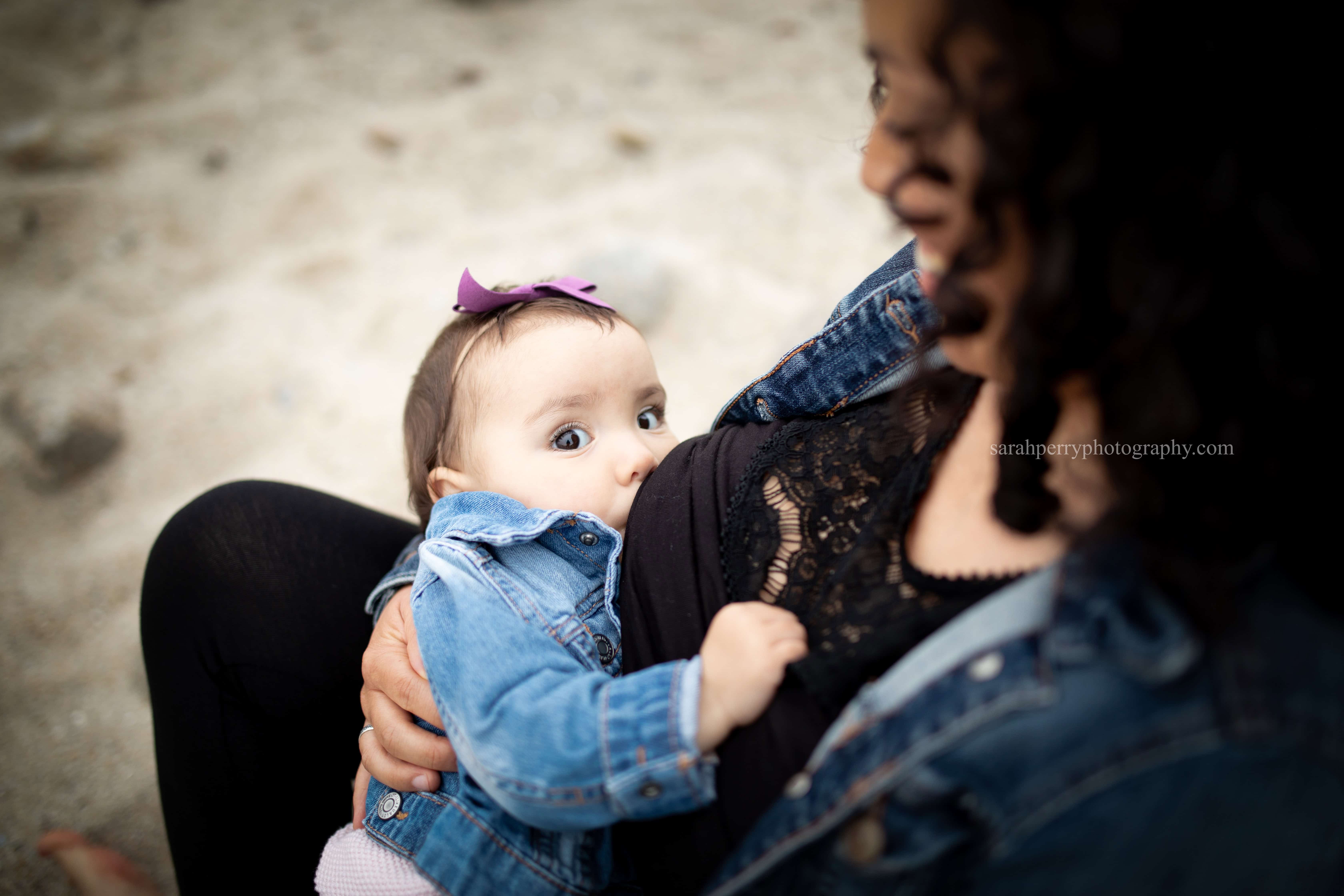
For babies younger than 6 months, the safest and gentlest approach is for the breastfeeding parent to take the full adult dose of the herb. The herb passes into breastmilk in a much-diluted, age-appropriate form, and the baby receives the benefit during normal feeding. No separate dose, no dropper, no dilution.
This works for most gentle herbs commonly used in family herbalism. It does not work for every herb (some are not appropriate during breastfeeding at all), so check the specific herb’s safety profile before starting.
Shop safe herbs for babies and children.
Giving Herbs to Bottle-Fed Babies and Older Infants
For babies who are not breastfed, or for occasional direct dosing, a small amount of non-alcohol tincture or diluted herbal tea can be given:
- Add to a bottle. Mix the recommended drops into formula, expressed breastmilk, or water in the bottle.
- Use a separate dropper or spoon. Don’t put the original tincture dropper directly into a baby’s mouth. The glass tube can break if bitten, and mouth contact contaminates the bottle and can cause the tincture to spoil.
- Dilute first. Even with non-alcohol glycerin tinctures, dilute the dose in a small amount of liquid before giving it to a baby. A teaspoon is plenty.
Babies over 6 months can take herbs directly using the dosage chart above, starting at the low end of the range.
Alcohol vs Non-Alcohol Tinctures: Which to Use for Kids
Most herbal tinctures are made one of two ways:
- Alcohol tinctures use grain alcohol as the extracting solvent. They have a long shelf life and extract a wide range of plant compounds.
- Non-alcohol tinctures use vegetable glycerin instead. They’re naturally sweet, alcohol-free, and easier to give to children.
For babies and children, always reach for the non-alcohol version when it’s available. The glycerin base is more palatable, and there’s no alcohol exposure for developing systems. Herb Lore offers non-alcohol versions of most tinctures for this reason.
If only the alcohol version is available and you need to give it to a child, dilute the dose in a small amount of warm water, juice, breastmilk, or formula. The warm water helps a small amount of the alcohol evaporate before the dose is given.
Calculating Custom Dosages: Young’s Rule and Cowling’s Rule
If your child’s age falls between the chart entries, or you’re working with a tincture whose adult dose differs from the standard 2 droppersful, two traditional formulas can help you calculate a scaled dose.
Young’s Rule
Add 12 to the child’s age, then divide the child’s age by that total.
Example: For a 4-year-old, 4 divided by (4 + 12) = 4 / 16 = 0.25, or one-quarter of the adult dose.
Cowling’s Rule
Divide the number of the child’s next birthday by 24.
Example: For a child who is 3 and turning 4, 4 divided by 24 = 0.167, or about one-sixth of the adult dose.
Both formulas give similar results for most ages. Use them as a sanity check against the chart above.
Practical Tips for Giving Tinctures to Kids
A short checklist for tincture dosing:
- Dilute the dose. Even non-alcohol glycerin tinctures go down easier when mixed into a teaspoon of water, juice, breastmilk, or formula.
- Don’t let your child suck on the dropper. Babies want to gum the dropper, but the glass tube can break, and mouth contact introduces bacteria that can spoil the tincture. Squeeze the dose into a small spoon or directly into a bit of liquid.
- Watch for mold. If you ever see a white or grayish growth floating on the surface or attached to the dropper, the bottle has been contaminated. Discard it. Properly handled tinctures don’t develop mold under normal storage conditions.
- Keep tinctures out of reach. Bottles with droppers are interesting to toddlers, and a curious child can easily exceed the recommended dose. Store on a high shelf or in a locked cabinet.
- Track new introductions. When you start a new tincture, give it on its own for a few days before adding anything else, so you can spot any sensitivity.
Frequently Asked Questions About Herbal Dosing for Children
How much tincture should I give a 2-year-old?
About 10 drops per dose, when the adult dose is 2 droppersful (60 drops). Follow the frequency on the product label.
How much tincture should I give a 4-year-old?
About 15 drops per dose, following the product label for frequency.
How many drops of tincture for a 6-year-old?
About 24 drops per dose. By age 9 to 12, the dose is roughly 30 drops, and at age 12 and older most kids move to the full adult dose.
Can I give a tincture to a baby under 6 months?
Direct dosing is not recommended for babies under 6 months. The gentler approach is for the breastfeeding parent to take the adult dose so the herb passes through breastmilk. For bottle-fed babies in occasional situations, a few drops of non-alcohol tincture diluted in formula or water can be given. Check with your pediatrician first.
How much mullein tincture should I give my child?
Apply the children’s tincture dosage chart. A 2-year-old would take 10 drops per dose, a 4-year-old would take 15 drops, and a 6-year-old would take 24 drops. Follow the product label for how many doses per day, and choose the non-alcohol version when giving mullein to kids.
Is mullein tincture safe for babies?
Direct dosing is not recommended for babies under 6 months. The breastfeeding parent can take the adult dose so the herb passes through breastmilk. Babies over 6 months can be given small amounts of non-alcohol mullein tincture diluted in formula or water, starting at 4 drops for ages 6 to 9 months. Talk with your pediatrician before starting any herbal product for an infant.
Can I mix a tincture into juice or milk?
Yes. Diluting the dose in a small amount of juice, water, breastmilk, or formula is the standard way to give tinctures to young children. Use just enough liquid for them to take it in one go.
How often can I give my child an herbal tincture?
Follow the frequency on the product label. The dosage chart in this guide tells you how much per dose; the label tells you how many doses per day.
At what age can a child take the full adult dose?
Generally age 12 and older. Body size and overall health factor in too, not just age, so use judgment for kids who are notably smaller or larger than average.
What’s the difference between droppersful and drops?
A “dropperful” usually refers to a partially filled dropper, roughly 30 drops. Two droppersful is about 60 drops. Drop counts can vary slightly by dropper design, so when you’re scaling for a child, drops are the more precise unit to use.
Can I use a regular adult tincture for my child?
Yes, with proper scaling. Use the dosage chart in this guide to determine the correct number of drops by age, and dilute the dose in water or juice. For young children, choose the non-alcohol version of the tincture when one is available. For more on how tinctures work, see What Are Tinctures and How Do You Use Them?
References and Further Reading
- What Are Tinctures and How Do You Use Them?
- Herb Lore’s Certified Organic Mullein Tincture
- Herb Lore’s Collection of Certified Organic Safe Herbs for Kids & Babies
- Herbs to Avoid During Pregnancy and Lactation
- Herbal Remedies for Children’s Health by Rosemary Gladstar
Written by Pam Caldwell, Certified Herbalist specializing in Fertility, Pregnancy, Birth, Postpartum, and Lactation.